A pipeline built from signals —
not bid-board listings.
Sympl · Signal turns weak pre-procurement signals into a stage-classified opportunity pipeline. Each project comes with source evidence, stakeholder context, a size estimate, and a recommended next move — not just an alert.
Opportunity briefs
Every opportunity surfaces as an actionable brief, not a raw signal.
Sympl · Signal doesn't send you a link to a board packet and call it intelligence. Each opportunity is assembled into a brief with the context you need to act.
Lakeview USD — HVAC Replacement Program
K-12 / Mechanical · Energy audit complete · 91% confidence
Est. project size
$4.2M
Pursuit window
~8 months
Delivery
Design-bid-build
Stage
3 of 5
Sources
Project name & location
Specific owner entity, site, and jurisdiction.
Stage classification
Where in the pre-procurement lifecycle the project is — spark, planning, funding, scope, or pursuit window.
Estimated project size
Dollar range based on comparable projects, CIP line items, and bond ballot language.
Pursuit window estimate
Rough timeframe before procurement posts — so you know how much runway you have.
Source documents
The specific board minutes, CIP entries, grant awards, or regulatory filings that triggered the signal.
Stakeholder map
Every person tied to the project — owner contacts, consultants, engineers, and officials.
Recommended next moves
What to do with this signal now, based on the project's current stage.
Stage-based action
Different stages require different moves.
Sympl · Signal infers project stage from the signal pattern and tells you what to do — not just that a project exists.
Initial spark
Monitor for planning commission or feasibility study. No action needed yet.
Planning signal
Identify who the consultant is. Send a capabilities statement to the facilities director.
Funding
Engage the owner and consultant. Offer to present at a lunch-and-learn or pre-bid walkthrough.
Scope
Build the relationship with the engineer. Position your firm or product on the basis of design.
Pursuit window
Full pursuit mode. Respond to CMAR RFQ. Confirm spec position. Track bid-package schedule.
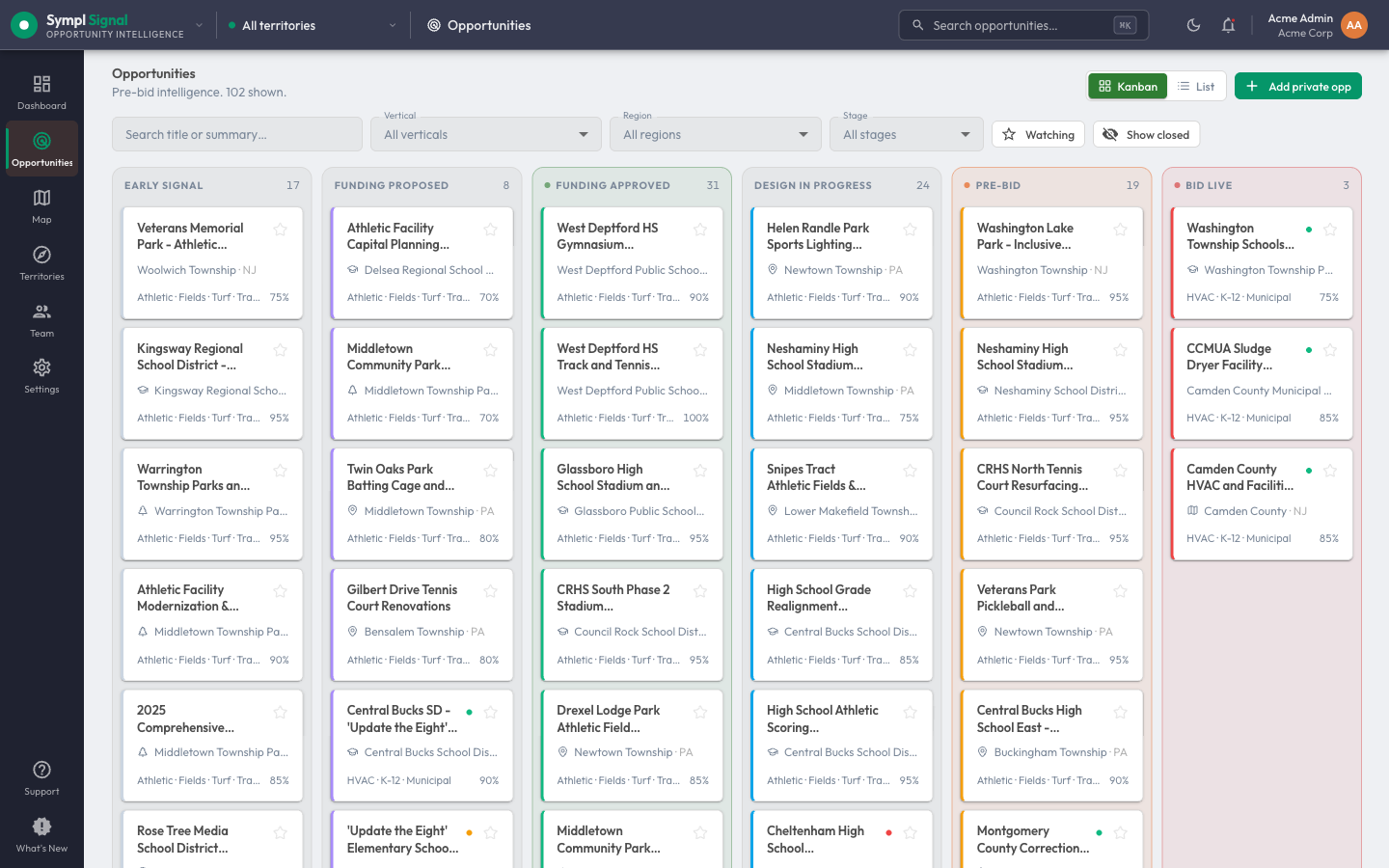
Every project on one board, sorted by the stage Signal infers from the evidence — so you can see the whole pipeline and act stage by stage.
Why it's different
Not a lead list. A pipeline with context.
Prioritized, not just listed
Move from a pile of alerts to a tighter view of where to spend attention. Projects are stage-classified and sized so you can allocate pursuit energy deliberately.
Evidence-backed, not just flagged
Every opportunity comes with the source documents that triggered it. You can trace every signal back to the board minutes, CIP entry, or grant award it came from.
Actionable, not just informational
Each brief includes a recommended next move based on the project's current stage — attend the next board meeting, reach out to the consultant, or monitor for A/E selection.
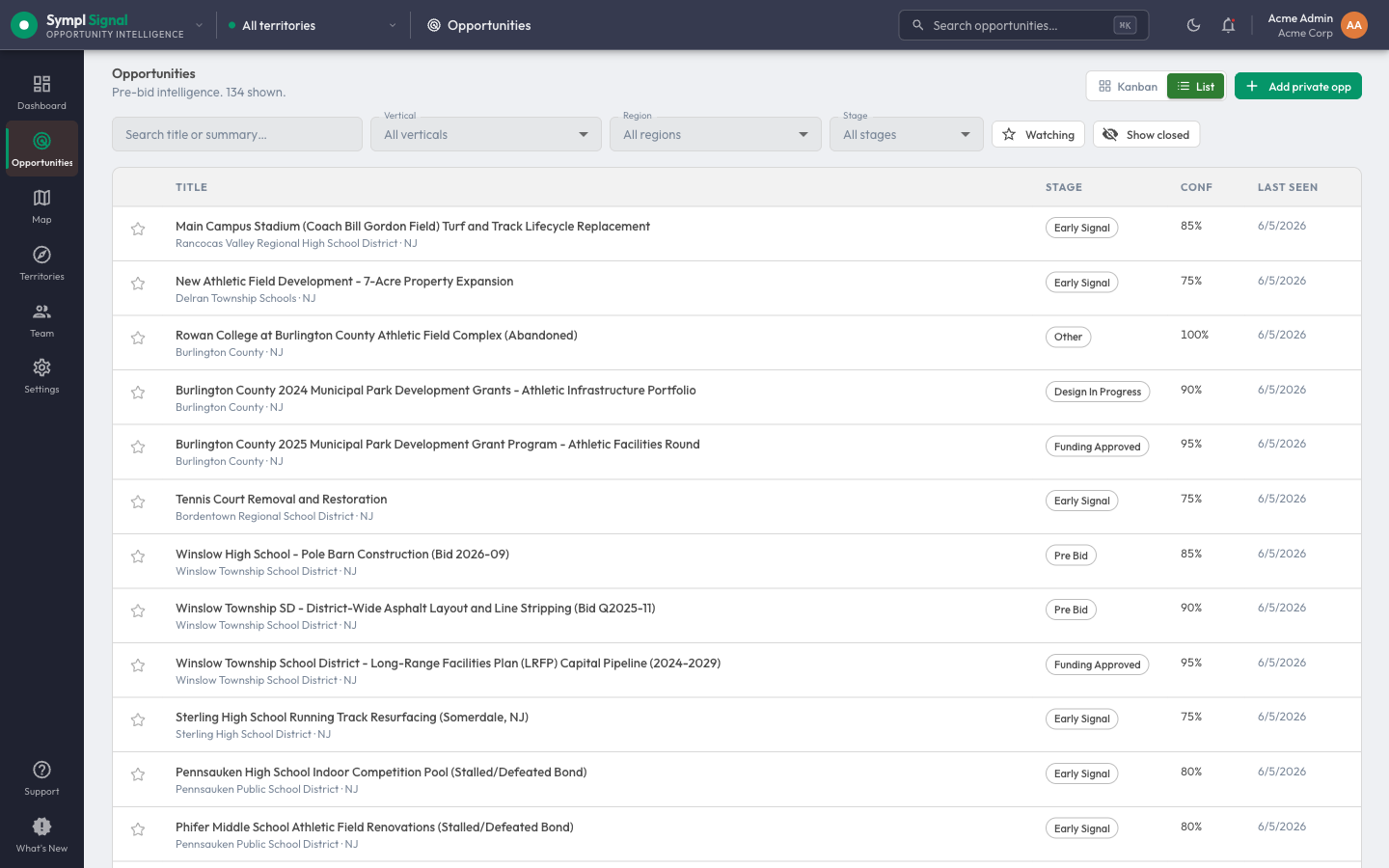
Filter by vertical, region, and stage; every project carries a confidence score — so your team spends pursuit energy where it counts.
Build a pipeline your competitors can't see.
Stage-classified opportunities, evidence-backed briefs, and recommended next moves — from the signals that precede procurement.